

The best AI product management books in 2026
 Marc GasserSoftware Entrepreneur · Product × GTM × AIProduct × GTM × AI: builds B2B software companies with humans + agents.
TL;DR
- 33 AI product management books pass the 2026 filter of at least 4.0 stars and ten Amazon ratings – eight core titles in depth, the rest compact on five themed shelves.
- The clearest shift of the vintage: agentic AI dominates – a quarter of the titles cover agent systems. The technical standard work remains Chip Huyen's “AI Engineering” at 4.6 stars from 839 ratings, the largest base on the list.
- The review pattern across all titles: frameworks and real-world examples earn the praise; the criticism targets shallowness for experienced readers and how quickly GenAI chapters age.
Key findings
- 30 of the 33 titles were published in 2025 or 2026 – the discipline's standard works are being written right now; an established canon doesn't exist yet.
- The structure of the list: eight core AI product management titles plus five shelves – technical foundations, agentic AI, design and workflow, strategy and organisation, German-language titles.
- For several titles the Amazon and Goodreads verdicts diverge – Bratsis: 4.4 versus 2.9; Nika: 4.0 versus roughly 3.3. Counting stars is no substitute for reading the critical reviews.
- For the first time two German-language titles pass the filter: Kirchmair's EU AI Act practice guide and Drouven's hands-on AI book. Also directly relevant for DACH teams: Lipenkova (projects for BMW, Lufthansa, Volkswagen).
How this list was put together
The question comes up in almost every conversation with product leaders: which AI product management books are actually worth reading? By 2026 the market has become crowded – an Amazon search returns dozens of hits, many thin, some visibly machine-produced. At the same time the need has never been bigger: coding agents deliver faster than teams can plan. The bottleneck isn't the coding, it's everything before and after – and that is exactly the part books train.
The filter stays deliberately simple: only books with at least 4.0 stars and at least ten ratings on Amazon on 9 July 2026 are included. That guards against single opinions and against freshly published titles with five friendly early reviews. Three sources are consolidated: the Amazon search for AI product management, an editorial top-30 survey of the 2025/2026 vintage and a reader recommendation list. After filtering and dedup, 33 titles remain.
To keep the list readable it has two tiers: the eight core AI PM craft titles each get a card with a short verdict and the review pattern – including the criticism that tends to drown on the product page. The remaining 25 titles sit compactly on five themed shelves, each a small book card with cover, rating and link.
1. Building AI-Powered Products – the foundation

Building AI-Powered Products
Marily Nika · O'Reilly, March 2025
4.0 out of 5 · 59 ratings on Amazon.de
View on Amazon.de ↗Marily Nika – around 13 years of AI products at Google and Meta, PhD in machine learning – walks through the complete AI product lifecycle from ideation to rollout, with templates for goals and KPIs and a dedicated part on AI agents. Core thesis: AI is not the product, the experience is. Reviews praise structure and the entry path; experienced AI PMs find familiar ground repeated, and on Goodreads the book sits at roughly 3.3. Strong as a foundation, not meant as a deep dive.1,9
2. The AI Product Playbook – roles, models, careers

The AI Product Playbook
Marily Nika, Diego Granados · Wiley, October 2025
4.2 out of 5 · 22 ratings on Amazon.de
View on Amazon.de ↗Nika and Diego Granados – one of the best-known PM career coaches as “PM Diego” – distinguish three AI PM profiles (AI Experiences, AI Builder, AI-Enhanced) and build skill paths on top: first how models actually learn, then GenAI evaluations, MLOps, responsible AI and portfolio building. If your question is which type of AI PM to become, this gives the clearest answer on the list. Readers praise the frameworks and current case studies; substantive criticism has barely been published since the October 2025 release.2
3. AI Product Manager's Handbook – the broad survey

AI Product Manager's Handbook
Irene Bratsis · Packt, 2nd edition, November 2024
4.4 out of 5 · 21 ratings on Amazon.de
View on Amazon.de ↗Across 488 pages Irene Bratsis covers four fields: the AI landscape, AI-native products, converting classic software, and the AI PM career. The author is a career changer – the book is a guide for people who still have the transition ahead of them, not a big-tech insider report. On Goodreads the first edition sits at 2.9; the gap to Amazon comes down to expectations: readers seeking an overview with checklists are satisfied, readers expecting concrete implementation guidance find the chapters too general and repetitive in places.3,9
4. The Art of AI Product Development – strategy to adoption

The Art of AI Product Development
Janna Lipenkova · Manning, July 2025
4.3 out of 5 · 13 ratings on Amazon.de
View on Amazon.de ↗Janna Lipenkova – PhD in computational linguistics, AI consultant with projects for BMW, Lufthansa and Volkswagen – spans the arc from discovery through development to adoption: prioritising opportunities, mapping the solution space from predictive AI to agents, then UX under uncertainty, governance and stakeholder work. Her thesis: adoption is decided by trust, not technology. The smallest rating base among the core titles, but consistently positive – at roughly 4.4 on Goodreads one of the best-rated AI PM books; the recurring criticism is the price-to-depth ratio.4,9
5. Successful AI Product Creation – nine steps for the enterprise

Successful AI Product Creation
Shub Agarwal · Wiley, April 2025
4.6 out of 5 · 45 ratings on Amazon.de
View on Amazon.de ↗Shub Agarwal – SVP at U.S. Bank, lecturer at the University of Southern California – lays nine steps over the path from problem definition to model operations: mapping business goals, integrating the model development lifecycle with the SDLC, acceptance criteria for AI, explainability, model drift. The enterprise view on this list: delivering inside regulated organisations, not startup MVPs. Around 4.6 on Amazon and Goodreads alike – the most consistent verdict; reviewers call it “strategic and tactical at the same time”, and published dissent is almost entirely absent so far.5
6. UX for AI – design patterns for AI products

UX for AI
Greg Nudelman, Daria Kempka · Wiley, May 2025
4.2 out of 5 · 24 ratings on Amazon.de
View on Amazon.de ↗Greg Nudelman distils 35 real AI projects into a design toolbox: use-case selection, storyboarding, digital twins and the Value Matrix, which replaces model accuracy with real costs and benefits – one chapter is literally titled “AI Accuracy Is Bullshit”. He writes as a designer, not as a PM, and delivers the most convincing answer to why technically correct models still fail. Jakob Nielsen counts it among the few relevant books of the new UX world; review criticism targets almost only the print production – square format, overly long lines, of all things in a UX book.6
7. Zero to GenAI Product Leader – a playbook for the agentic era
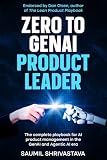
Zero to GenAI Product Leader
Saumil Shrivastava · Self-published, August 2025
4.6 out of 5 · 48 ratings on Amazon.de
View on Amazon.de ↗Saumil Shrivastava – product work on Microsoft's Azure AI platform – combines GenAI and agent fundamentals (orchestration, infrastructure, model and application layers) with team playbooks and a full career part including interview preparation; short segments with recaps make it a reference work. The most current core title on the agentic era, and the only one that consistently thinks craft and career change together; Dan Olsen and Lewis C. Lin endorse it. Kirkus praises the clear tone, readers the career chapters; substantive criticism is still rare since the August 2025 release.7
8. Reimagined – the early view on GenAI products
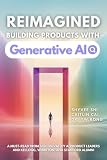
Reimagined: Building Products with Generative AI
Shyvee Shi, Caitlin Cai, Yiwen Rong · Self-published, January 2024
4.3 out of 5 · 57 ratings on Amazon.de
View on Amazon.de ↗In early 2024 Shyvee Shi, Caitlin Cai and Yiwen Rong collected 150+ examples, 30 case studies and 20 frameworks – one of the very first books on GenAI product work, grown out of Shi's LinkedIn series. Its value today lies in the problem-first frame from before best practices existed, not in currency. Also the most divided reception on the list: on Goodreads it sits at roughly 3.3, with recurring criticism of shallowness (“neither wide nor deep”); newcomers praise the orientation, experienced PMs find little that is new. Read it deliberately as a historical starting point.8,10
Shelf 1: technical foundations for PMs
You don't have to train a model – but you do have to speak your engineers' language. Five titles deliver the vocabulary; ratings as of 9 July 2026, each linked to its Amazon product page.

Chip Huyen · O'Reilly, January 2025 · 4.6 out of 5 · 839 ratings on Amazon.de
The standard work on building with foundation models – evaluation, prompting, RAG, fine-tuning, inference costs – with by far the largest rating base on this list.

Generative AI Design Patterns ↗
Valliappa Lakshmanan, Hannes Hapke · O'Reilly, November 2025 · 4.7 out of 5 · 21 ratings on Amazon.de
30+ named patterns for reliability, grounding, evaluation and cost – problem → pattern → trade-off, quotable in architecture debates.

Machine Learning for Product Managers ↗
Richa Deshwal · July 2025 · 5.0 out of 5 · 20 ratings on Amazon.de
ML literacy in 200 pages, deliberately without the maths – the most compact bridge from PM craft to model intuition.

Learn Model Context Protocol with Python ↗
Christoffer Noring · October 2025 · 4.5 out of 5 · 11 ratings on Amazon.de
An introduction to MCP, the emerging standard connecting models to tools and data – relevant to any integration roadmap.

Soudamini Sreepada · December 2025 · 4.9 out of 5 · 10 ratings on Amazon.de
Ten blueprints for AI system architecture, doubling as system-design interview preparation – just above the filter threshold.
Shelf 2: understanding and building agentic AI
No topic has shaped the 2025/2026 vintage like agents. Eight titles, ordered from business to engineering:

Agentic Artificial Intelligence ↗
Pascal Bornet, Jochen Wirtz · March 2025 · 4.4 out of 5 · 452 ratings on Amazon.de
The business view from ten practitioner-authors: what agents can and cannot do – deployment case studies and failure patterns instead of evangelism.

Principles of Building AI Agents ↗
Sam Bhagwat · February 2025 · 4.0 out of 5 · 95 ratings on Amazon.de
A short practical primer on agent architectures – prompting, tool calling, memory, multi-agent – from the co-founder of the Mastra framework.

Alexander J. Daniels · September 2025 · 4.0 out of 5 · 94 ratings on Amazon.de
Your first working agent in 30 days, framed as a project plan with weekly milestones – written for non-engineers.

Antonio Gullí · October 2025 · 4.3 out of 5 · 78 ratings on Amazon.de
Reusable patterns for planning, reflection, tool use and multi-agent collaboration – in the style of the classic design patterns.

Building Applications with AI Agents ↗
Michael Albada · O'Reilly, October 2025 · 4.2 out of 5 · 48 ratings on Amazon.de
Production-grade single- and multi-agent systems: orchestration, memory, evaluation, cost control – focused on what breaks at enterprise scale.

Sinan Ozdemir · Pearson, November 2025 · 4.1 out of 5 · 19 ratings on Amazon.de
The full agent lifecycle with worked code examples; strong on measurement and optimisation where others stop at “it works”.

Agentic Architectural Patterns ↗
Ali Arsanjani, Juan Pablo Bustos · January 2026 · 4.2 out of 5 · 20 ratings on Amazon.de
Reference architectures and maturity models for GenAI, RAG, LLMOps and multi-agent systems – enterprise governance included.

Hyun Erwin · March 2026 · 4.5 out of 5 · 15 ratings on Amazon.de
Reasoning loops, tool use and reliability – treats system prompts as the central engineering artefact.
Shelf 3: design, UX and your own workflow
Alongside Nudelman's core title: five books on AI interfaces – and on putting AI to work in your own PM routine.

Designing Assistant Technology ↗
Christopher Noessel, Joel Lewenstein · March 2026 · 4.5 out of 5 · 17 ratings on Amazon.de
Design principles for assistants that make people smarter rather than merely faster – the contrarian north star of this shelf.

Think Like a Designer, Build with AI ↗
Lise Pilot · June 2025 · 5.0 out of 5 · 14 ratings on Amazon.de
A design-thinking path to no-code AI products: problem framing and taste beat coding as the scarce skill.
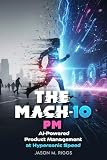
Jason Riggs · September 2025 · 4.1 out of 5 · 13 ratings on Amazon.de
AI applied to the PM's own work – discovery, specs, stakeholder comms, analysis – rather than to the product.

Agentic Coding with Claude Code ↗
Eden Marco · March 2026 · 4.5 out of 5 · 20 ratings on Amazon.de
Delegating real development work to a coding agent: context management, CLAUDE.md, MCP – the agent as a junior teammate that wants managing.

Tung KnowYa · April 2025 · 4.5 out of 5 · 18 ratings on Amazon.de
Beginner-friendly chaining of multiple agents for personal productivity, with templates and no-code walkthroughs.
Shelf 4: strategy, organisation and data
Five titles for the level above the single product – from product-market fit through the ML-deployment discipline to org structure.

Jeffrey Bussgang · March 2025 · 4.5 out of 5 · 54 ratings on Amazon.de
A VC's view of product-market fit in the AI era: AI collapses the cost of experiments – founder judgement becomes the scarce resource, not engineering time.

10X ORG – Powered by Org Topologies ↗
Alexey Krivitsky, Craig Larman · February 2026 · 4.9 out of 5 · 25 ratings on Amazon.de
Co-authored by LeSS creator Craig Larman; the thesis: AI gains are capped by org design – de-scale structures first, then scale with AI.
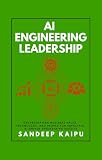
Sandeep Kaipu · June 2025 · 4.8 out of 5 · 15 ratings on Amazon.de
Between CTO and CPO: aligning AI initiatives with business value – team topology, delivery governance, stakeholder management.

Amy Raygada · January 2026 · 4.6 out of 5 · 14 ratings on Amazon.de
From data projects to managed data products: ownership, governance, contracts – product discipline applied to data assets.

Eric Siegel · MIT Press, February 2024 · 4.4 out of 5 · 79 ratings on Amazon.de
Siegel's six-step bizML framework takes machine-learning projects from idea to deployment – the widely-cited reference on why ML initiatives stall between data science and the business. An antidote to the AI hype: why some initiatives ship and many don't.
Shelf 5: German-language titles
Two German-language books pass the filter – both closer to compliance and daily practice than to product craft.

AI Act Competence + Compliance ↗
Markus Kirchmair · April 2025 · 4.3 out of 5 · 17 ratings on Amazon.de
The EU AI Act as an implementation checklist: risk classes, duties, AI competence under Article 4 – complements our deep dive the EU AI Act for product managers.

Das große KI-Praxisbuch für den Business-Alltag ↗
Uwe Drouven · February 2026 · 4.6 out of 5 · 13 ratings on Amazon.de
Hands-on work with Gemini, AI Studio and NotebookLM in daily office life – a tool book, not a strategy volume.
Which book for which phase of the product cycle?
The honest answer to “which one should I read?” depends on the phase your team is currently stuck in. This is how the core titles map onto the Discover, Define, Build, Operate cycle:
Discover. Lipenkova's first part and Nudelman's use-case chapters sharpen the question of whether a problem can tolerate an AI solution at all – the same question our framework asks in AI product discovery: finding problems AI should actually solve.
Define. Agarwal's acceptance-criteria chapter and Nika's lifecycle checkpoints help where ideas have to become specs – the core of spec-driven development in brownfield.
Build. Nudelman's patterns and Shrivastava's agent chapters accompany delivery; what the tickets for it look like is covered in the anatomy of a Jira ticket for AI product management.
Operate. Agarwal (model operations) and Lipenkova (governance) cover operations – including the quiet quality decay described in model drift: when your product quietly degrades.
The shelves follow the same logic: the technical foundations feed Define and Build, the agentic shelf feeds Build, strategy and organisation feed Discover and Operate – and Kirchmair's AI Act checklist belongs, like our compliance deep dive, in the Discover phase.
Across all phases one thing holds: books provide the map. The living product context – who decided what and why, what the code can actually do – is kept current by no book. That is work for your system, not for your bookshelf.
Frequently asked questions
Which book is the best entry point into AI product management?
“Building AI-Powered Products” by Marily Nika: it covers the whole lifecycle, assumes no prior knowledge and ships templates for goals and KPIs. If you first want to understand how ML models learn, start with “The AI Product Playbook” instead.
Do I need machine learning knowledge for these books?
For the eight core titles: no, they address product roles without an ML background; the most technical parts are Lipenkova's middle chapters (RAG, fine-tuning, agents), which explain the concepts from the ground up. On the technical and agentic shelves, individual titles such as Huyen or Ozdemir work with code – basic understanding helps there.
Which book is most worthwhile for CPOs and CTOs?
“The Art of AI Product Development” by Janna Lipenkova: no other title treats adoption, governance and stakeholder work as thoroughly, and her projects for BMW, Lufthansa and Volkswagen make the examples relatable for DACH decision-makers. For regulated industries, Agarwal's nine-step framework complements the governance side.
How quickly do books on AI product work become outdated?
The tool and model chapters age in months, the frames of thinking barely do: error tolerance, acceptance criteria, the Value Matrix and adoption work stay valid regardless of which model currently leads. That is why this list weights frameworks over currency.
Are there German-language books that pass the filter?
Two: Markus Kirchmair's practice guide to the EU AI Act (4.3 stars, 17 ratings) and Uwe Drouven's hands-on AI book for daily business (4.6 stars, 13 ratings) – both closer to compliance and daily practice than to product craft. The actual AI product management craft is currently being written almost exclusively in English.
Recommendations
- Choose by phase, not by ranking. A team stuck in discovery needs Lipenkova, not a second foundations book. The phase mapping above is the fastest route to the right title.
- Read with your backlog open. Take a live initiative and apply each framework directly – Nudelman's Value Matrix or Agarwal's acceptance criteria only show their worth on a real case.
- Combine foundation and specialisation. One foundations book (Nika or Bratsis) plus one specialist title for your bottleneck (UX, enterprise, agentic) covers more ground than three overviews.
- Read the critical reviews first. For several titles the Amazon and Goodreads verdicts are far apart. The two-star reviews tell you faster than the blurb whether a book is written for your level.
- Turn reading into team knowledge. Capture the most useful frameworks as skill files instead of leaving them in one person's head – that way what you learned survives the next staff change.
Scope & caveats
- Stars and rating counts are a snapshot from 9 July 2026 – based on the Amazon search (from Switzerland) and an editorial top-30 survey of the 2025/2026 vintage. They change continuously; the book cards state the capture date.
- The filter – at least 4.0 stars, at least ten ratings – excludes young titles that may yet prove themselves. Several books published in 2026 failed only on the rating count.
- The core titles' review verdicts condense public Amazon and Goodreads reviews plus trade reviews (Kirkus and UX blogs among others). That is a subjective picture, not a representative sample – and Goodreads rates several titles noticeably harsher than Amazon. The shelf titles are not individually reviewed, only admitted through the filter.
- The Amazon links are not affiliate links; we earn nothing from purchases. Some shelf links point to the Kindle edition – formats and prices differ per edition. The selection reflects our lens: B2B software teams in the DACH region.
- 31 of the 33 titles are in English; the two German-language ones sit on shelf 5 and cover compliance and daily practice, not product craft.
Sources
Every external figure and quote in this piece – linked so you can verify it.
- 1.Amazon.de – Building AI-Powered Products (Marily Nika) ↗ – Rating snapshot 9 July 2026: 4.0 stars, 59 ratings.
- 2.Amazon.de – The AI Product Playbook (Nika & Granados) ↗ – Rating snapshot 9 July 2026: 4.2 stars, 22 ratings.
- 3.Amazon.de – AI Product Manager's Handbook (Irene Bratsis) ↗ – Rating snapshot 9 July 2026: 4.4 stars, 21 ratings.
- 4.Amazon.de – The Art of AI Product Development (Janna Lipenkova) ↗ – Rating snapshot 9 July 2026: 4.3 stars, 13 ratings.
- 5.Amazon.de – Successful AI Product Creation (Shub Agarwal) ↗ – Rating snapshot 9 July 2026: 4.6 stars, 45 ratings.
- 6.Amazon.de – UX for AI (Greg Nudelman) ↗ – Rating snapshot 9 July 2026: 4.2 stars, 24 ratings.
- 7.Amazon.de – Zero to GenAI Product Leader (Saumil Shrivastava) ↗ – Rating snapshot 9 July 2026: 4.6 stars, 48 ratings.
- 8.Amazon.de – Reimagined: Building Products with Generative AI (Shi, Cai, Rong) ↗ – Rating snapshot 9 July 2026: 4.3 stars, 57 ratings.
- 9.Aiifi (2026), «9 Best AI Books for Product Managers» ↗ – Source of the Goodreads comparison figures (Nika ~3.3; Lipenkova ~4.4; Bratsis first edition 2.9).
- 10.Goodreads – Reimagined: Building Products with Generative AI ↗ – Goodreads average roughly 3.3 from 26 ratings (as of July 2026).
The takeaway
33 books, one shared finding: the bottleneck in AI product work isn't the coding but everything before and after – exactly the phases these titles train. You get the map from books; the living product context that grounds every decision is built in the discover phase of your own system.
Keep reading in the PM Lab
Related deep dives – from the same pillar and the adjacent phases.
Matching Activities from the Playbook
From the article straight into practice: these Activities put the concepts to work with Teklens.


No new piece without you.
New articles, new interactive tools, new evidence – in your inbox first. And when you reply, we reply: you write directly with the authors, not with a no-reply.
No spam, no sharing, unsubscribe any time.