

The AI Product Management Lab
Analysis, frameworks and interactive tools for product managers in the AI era. Every piece opens with the TL;DR, backs its claims with evidence and ends with an interactive tool and matching Playbook Activities – anchored in the cycle Discover, Define, Build, Operate.
Four phases. One system for AI product work.
Every post feeds one phase of the cycle Discover, Define, Build, Operate – together they form a system instead of scattered posts.

Discover · Context Engine
The Context Engine connects scattered signals into a living product context – the foundation for every decision that follows.

Define · Prioritisation
The Impact & Feasibility Matrix prioritises by value, effort and risk – the blueprint that humans and agents implement without follow-up questions.

Build · Live View
Live View shows real-time progress with code context – shipped, reviewed software without sprint-end surprises.

Operate · Auto-Resolve
Auto-Resolve resolves support and bugs with code context – knowledge flows back into discover, and the cycle starts again.
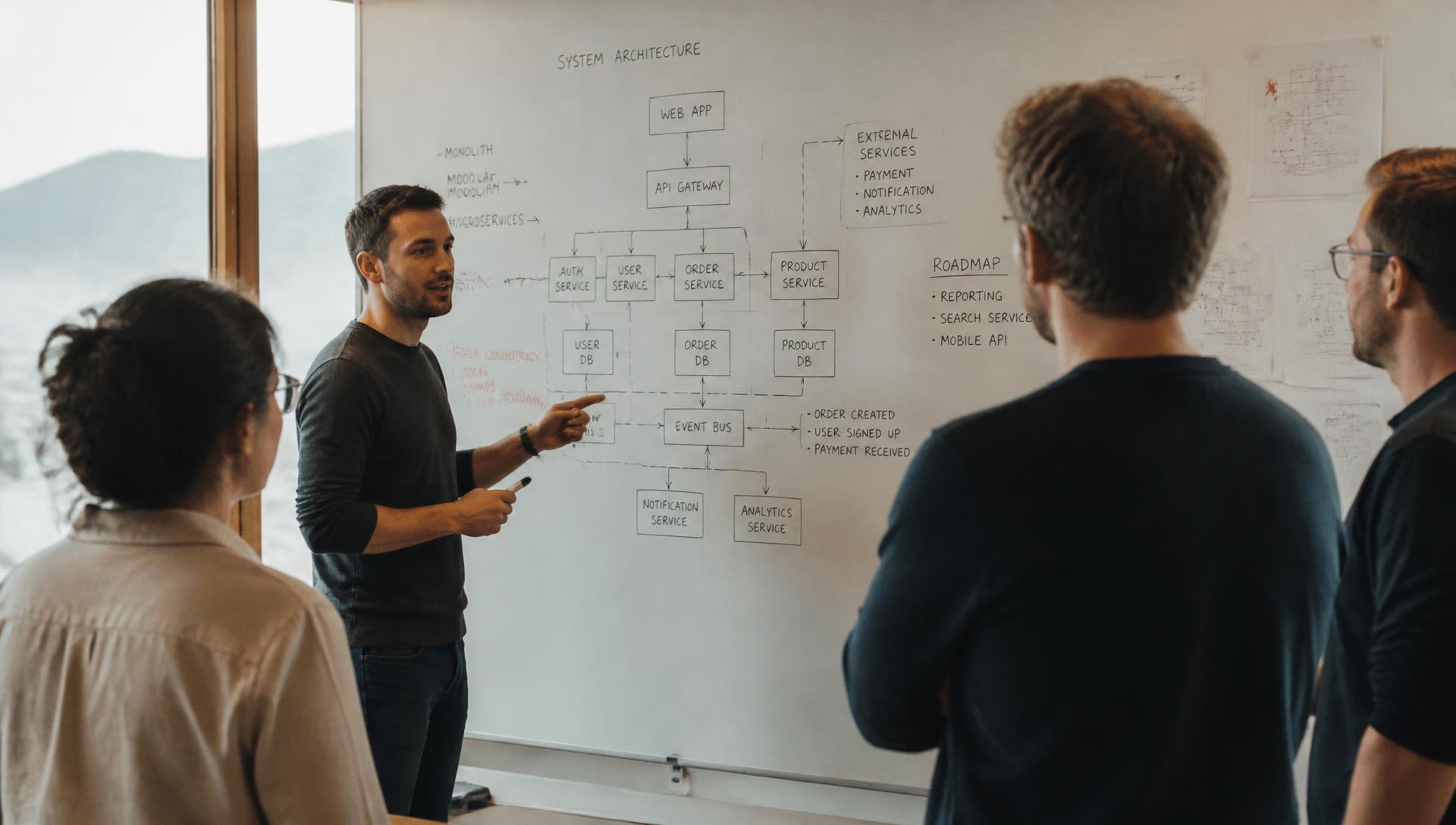
Build your own company brain: the enterprise AI playbook from Stripe's engineering team
Stripe gave 10,000 employees powerful agents without turning them into AI engineers. The ten decisions behind Kai: one company layer, projects as governance, skills as company IP, sandboxes, and the infrastructure underneath. And what the same architecture looks like for a software product team.
 Marc Gasser · Software Entrepreneur · Product × GTM × AI
AI product operating model: from managing work to managing context
The teams behind Claude Code, Codex and Cursor are not only coding faster. They delegate to agents, hand over whole features, build two prototypes instead of holding one meeting, and still hire product managers. Seven patterns from more than thirty interviews, one shift underneath: the scarce resource is no longer coding capacity. It is shared context and judgement. And why copying them blindly backfires.
Marc Gasser · Software Entrepreneur · Product × GTM × AI
Agentic loops: from prompting to a multiplayer team of agents
Prompt, context, harness, loop, graph: each stage gave the model more independence. The next one hands the work to the team. What makes loops work in coding, how to build a finish line where no compiler judges, and why multiplayer asks for more than a bigger loop.
Marc Gasser · Software Entrepreneur · Product × GTM × AI
Structured AI workflows: your team doesn't need better prompts – it needs structure
AI amplifies the structure your team already has – in both directions. Why curated context, a clear division of labour and checkpoints decide your AI payoff, with evidence from DORA, METR and Stack Overflow.
Marc Gasser · Software Entrepreneur · Product × GTM × AI
PM to engineer ratio: why a CPO regrets product management – and still hires PMs
Whatnot scales the fastest-growing US marketplace with just over 20 PMs – and a credo built to provoke: “We regret that product management exists.” What sits behind the pod ratio, and how to map PMs to problems instead of teams.
Marc Gasser · Software Entrepreneur · Product × GTM × AI
AI tools for product managers: the stack that carries context
There is no list of the best AI tools for product managers – there are six categories that together cover the product cycle. Which category solves which bottleneck, which tools are realistic in 2026, and where stacks fail.
Marc Gasser · Software Entrepreneur · Product × GTM × AI
Claude Code for Product Managers: the Setup That Turns a Chat Window Into a Colleague
Most product managers use Claude Code like a better search engine. What separates that from a real colleague isn't a better prompt – it's a set-up workplace: context, assignment, eyes, review, routines and permissions. This piece walks through the setup step by step.
Marc Gasser · Software Entrepreneur · Product × GTM × AI
Graph Engineering: Multi-Agent Workflows, Not Chat Chains
Graph engineering is the newest term in AI circles: organising several agents as a workflow instead of one long chat chain. With numbers from Anthropic and the counter-position from Cognition, this piece shows when a graph pays off – and when a single loop is enough.
Marc Gasser · Software Entrepreneur · Product × GTM × AI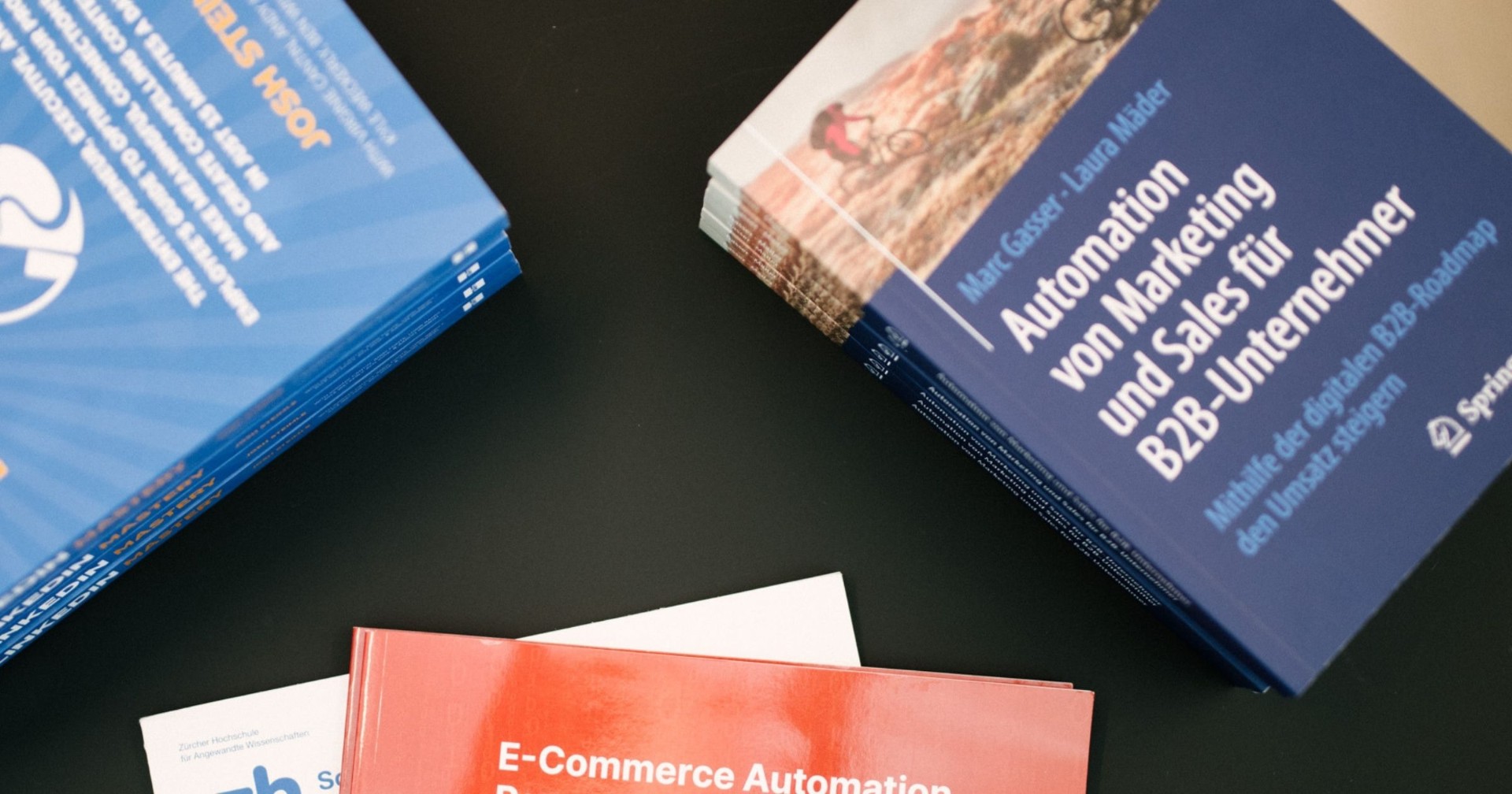
The best AI product management books in 2026
33 AI product management books, consolidated into one list: eight core titles in depth with verdicts and review patterns, the rest compact on themed shelves – from technical foundations through agentic AI to German-language titles. Filter: at least 4.0 stars and ten Amazon ratings.
Marc Gasser · Software Entrepreneur · Product × GTM × AI
Skill files: the next AI skill after prompting
Skill files are one-page operating manuals for a recurring task – an AI follows them without you in the room. Why they are the next skill after prompting, how to build one in an afternoon, and why every file needs an owner.
Marc Gasser · Software Entrepreneur · Product × GTM × AI
The anatomy of a Jira ticket for AI product management in agentic engineering
A good Jira ticket is a prompt in 2026 – context-complete enough for human and AI agent alike. The anatomy, with BMAD, context engineering and honest evidence.
Marc Gasser · Software Entrepreneur · Product × GTM × AI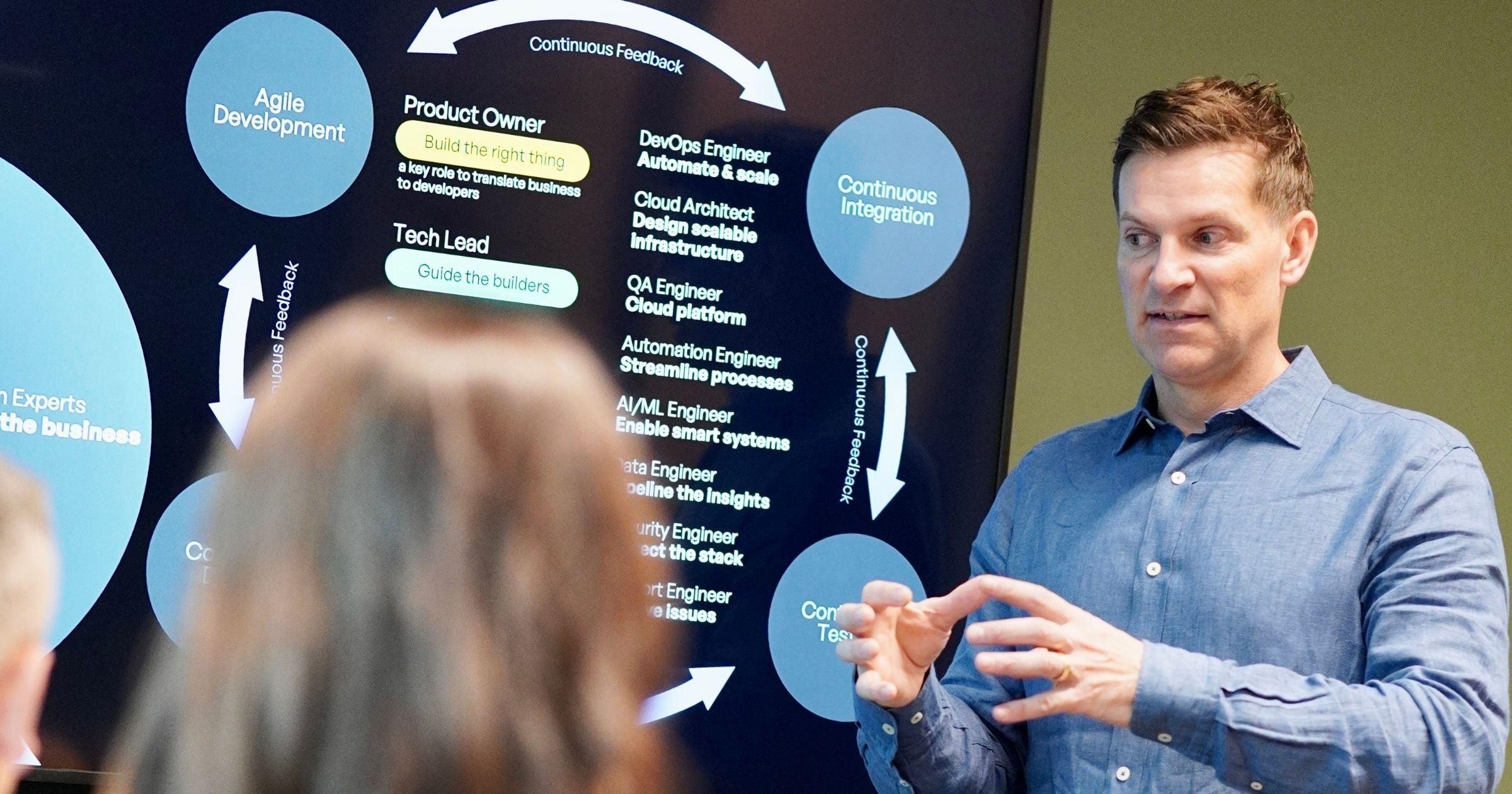
Model dependency: why model-agnostic workflows are becoming a boardroom issue
On 12 June 2026 a US agency pulled a three-day-old frontier model offline worldwide – by directive, overnight, without warning. The case shows what product teams long suppressed: dependence on a single AI provider is a strategic risk. How model-agnostic workflows defuse it.
Marc Gasser · Software Entrepreneur · Product × GTM × AI
Discovery stays human, execution becomes the spec: how product managers work with AI in brownfield
Discovery and strategy stay human; execution belongs to AI agents working against an agreed spec. Why gates don't cost speed but save it – with evidence from METR, GitClear, DORA and Anthropic.
Marc Gasser · Software Entrepreneur · Product × GTM × AI
The AI roadmap: how to unify feature requests and GenAI initiatives in one plan
An AI roadmap has to unify two logics: predictable feature delivery and experimental GenAI initiatives. A framework that brings both into one plan – with RICE scoring and code reality as the corrective.
Marc Gasser · Software Entrepreneur · Product × GTM × AI
AI product discovery: finding problems AI should actually solve
AI product discovery means finding problems AI should actually solve – because most failed AI features were solutions in search of a problem. Four questions every AI initiative must answer before the first prompt.
Marc Gasser · Software Entrepreneur · Product × GTM × AI
The EU AI Act for product managers: compliance as a design principle, not a brake
The EU AI Act regulates AI by risk class – with fines up to 35 million euros and deadlines shifted by the Digital Omnibus. What the law concretely means for product teams in DACH, and which five building blocks belong in the product now.
Marc Gasser · Software Entrepreneur · Product × GTM × AI
GTM strategy for AI products: convincing sceptical B2B buyers
A GTM strategy for AI products starts from an uncomfortable number: only 46 per cent of people worldwide trust AI systems – fewer still in wealthy countries. How to rebuild positioning, pricing and launch around trust in DACH B2B.
Marc Gasser · Software Entrepreneur · Product × GTM × AI
Agile for AI: sprints that survive model training
Agile software development with AI breaks a Scrum assumption: that effort and outcome are coupled. How to adapt sprints, definition of done and reviews without losing delivery discipline – with CRISP-ML(Q) and CD4ML as the map.
Marc Gasser · Software Entrepreneur · Product × GTM × AI
The MVP for AI: test the wizard before you build the machine
An MVP for AI answers a behaviour question, not a model problem – custom models are the most expensive way to refute a wrong hypothesis. How Wizard-of-Oz tests and foundation models validate AI ideas in days – and when custom ML is worth it at all.
Marc Gasser · Software Entrepreneur · Product × GTM × AI
Model drift: when your product quietly degrades
Model drift means 91 per cent of ML models degrade over time – without a single line of code changing. What data drift, concept drift and AI ageing mean for product teams, and what monitoring looks like that PMs can understand and steer.
Marc Gasser · Software Entrepreneur · Product × GTM × AI
PM, data scientist, ML engineer: who does what in the AI product team?
In the AI product team, features rarely fail at the model and often at the hand-off: responsibility seeps away between product, data science and engineering. The role boundaries that work – and the two questions every team must answer.
Marc Gasser · Software Entrepreneur · Product × GTM × AI
Why Spotify's product management won't work for your business – even less so with AI agents
Published on pedalix.com in February 2023, more relevant than ever in 2026: why copied squad autonomy fails – and why the very same lessons now decide whether AI agents bring your team speed or chaos. Substantially revised.
Marc Gasser · Software Entrepreneur · Product × GTM × AI
KPIs for AI products: prompt success beats MAU
KPIs for AI products need more than MAU and churn – those only see a dying AI feature once it is dead. The four measurement layers from acceptance rate to unit economics, and feedback loops that make quality measurable.
Marc Gasser · Software Entrepreneur · Product × GTM × AI
Customer journey mapping for AI: onboarding that builds trust
Customer journey mapping for AI starts from distrust: 54 per cent of people are wary of AI – your onboarding decides whether your feature is one of them. The four moments of the AI journey and Microsoft's human-AI guidelines in practice.
Marc Gasser · Software Entrepreneur · Product × GTM × AI
Product-led growth for AI SaaS: adoption that carries itself
Product-led growth means the product is the sales channel. AI features can power that engine – or eat the margin. How time to value, freemium dosing and upgrade triggers work for AI products.
Marc Gasser · Software Entrepreneur · Product × GTM × AI
Product management glossary: Jira & Linear terms explained
The most common product-management terms in software development, explained briefly – with a direct mapping of Jira and Linear terminology.


No new piece without you.
New articles, new interactive tools, new evidence – in your inbox first. And when you reply, we reply: you write directly with the authors, not with a no-reply.
No spam, no sharing, unsubscribe any time.
Ready to try this on your own backlog?
Try Teklens – connect Jira and code and test the shared Product Brain on real work.
Two paths: set the direction or test Teklens on real product work.