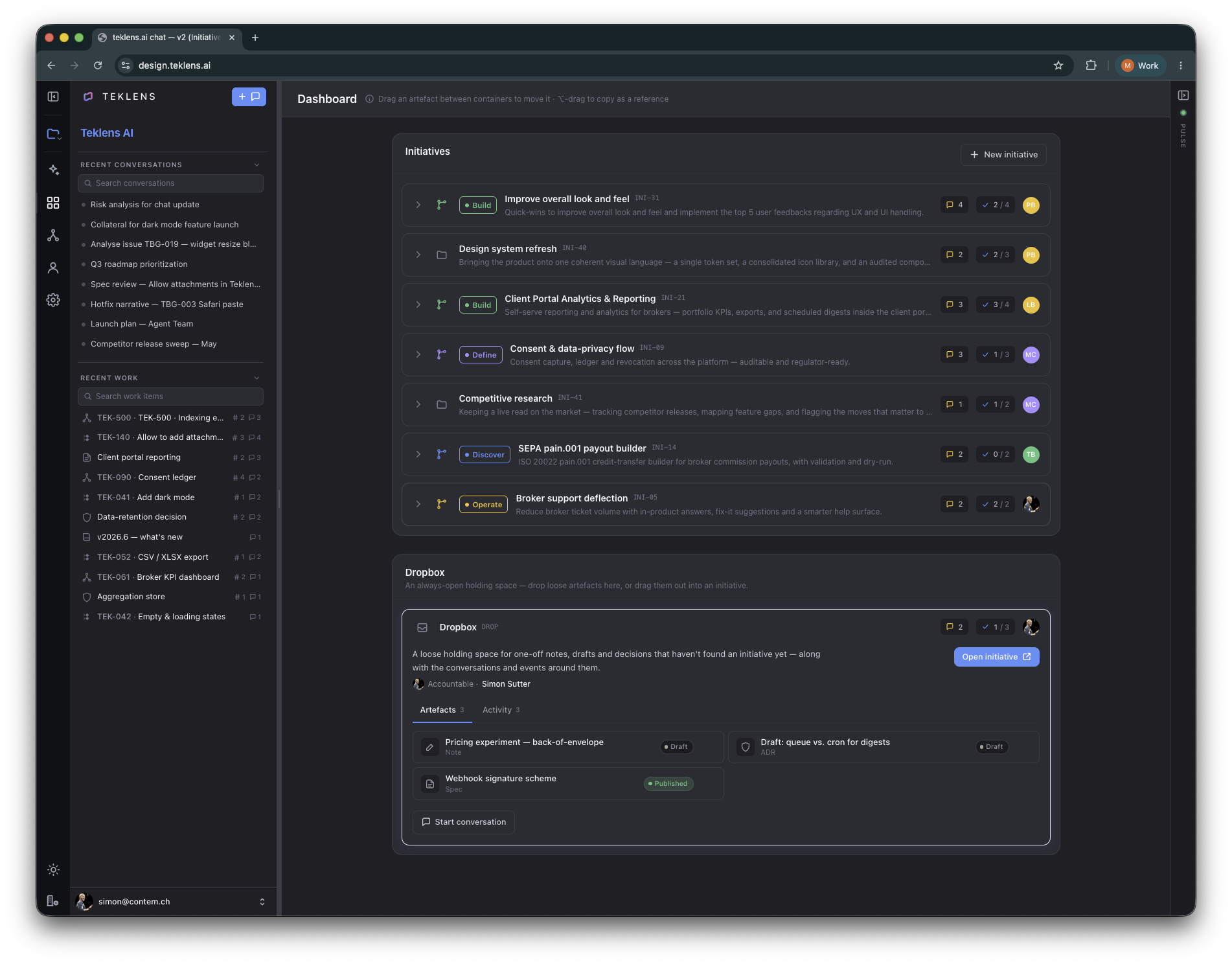
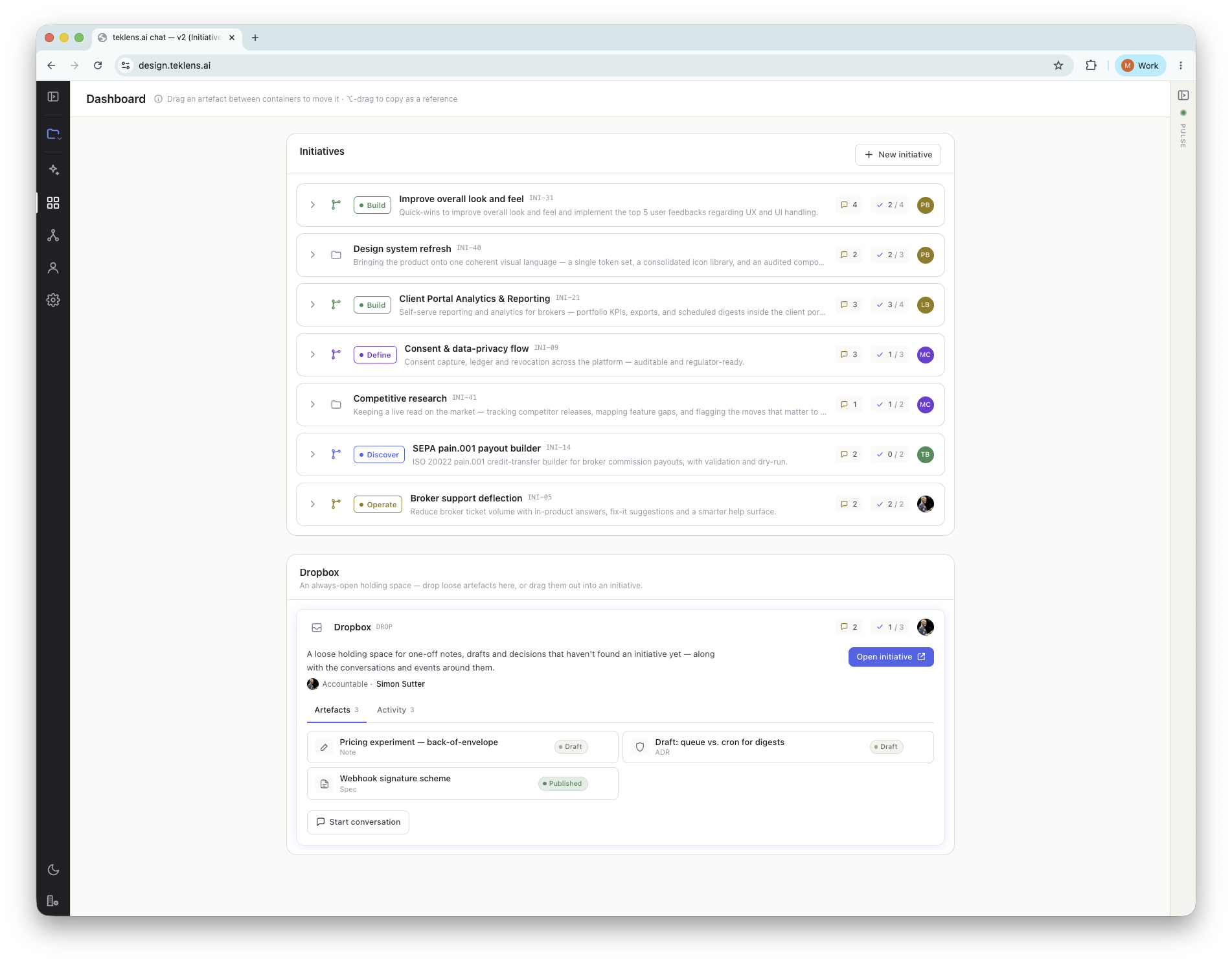
Dashboard – initiatives at a glance
01 · Discover
Discover
Signals from every source are clustered and prioritised against vision, personas and code. You see value vs effort instead of gut feel.
Teklens knows your product decisions, Jira and the actual code, and keeps people and agents aligned from decision to release. It takes coordination work off your product managers so they can focus on customers, strategy and decisions.
Creating a ticket is only the start. Teklens connects the decision and spec to Jira and the code that implements them. People and agents work from one current product context and can check where the result diverges before release.
Decisions, specs, Jira and code stay connected for people and agents.
Scattered ideas, bugs and feedback become a continuously prioritised roadmap – every position backed by value against effort, risk and complexity, grounded in the real code.
You decide what's canonical. Teklens keeps the state per initiative current and makes decisions traceable.
Pick the model per project (Claude, GPT, Gemini). CH/EU hosting, no training on your data.
Every source feeds a single Context Engine. The answer shows up where you work – no tab-hopping.
Every query goes through the Context Engine. It assembles the relevant context from every source.
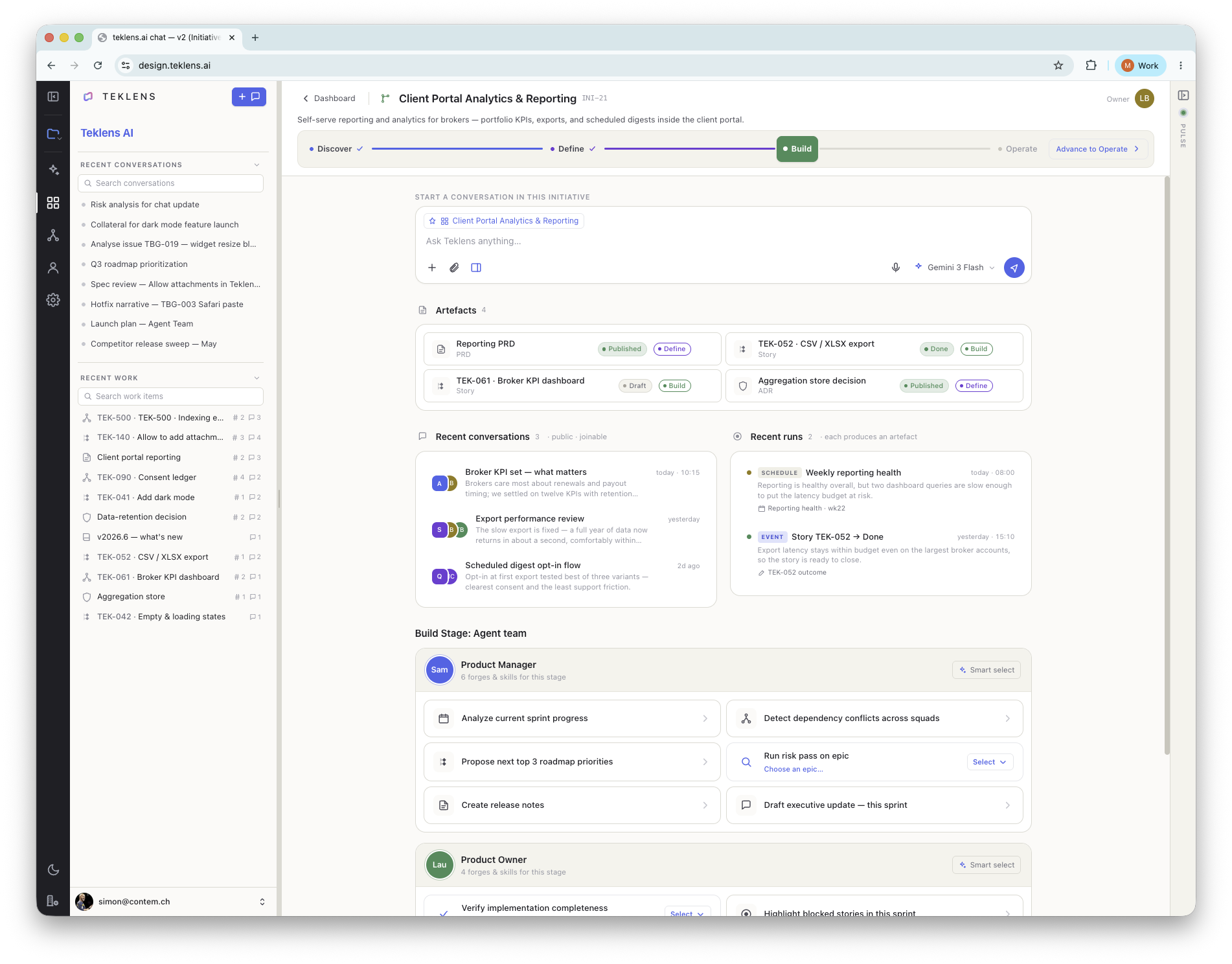
Decision → Spec → Plan → Build → Review → Ship. The groups below organise work along this journey.
Signals from every source are clustered and prioritised against vision, personas and code. You see value vs effort instead of gut feel.
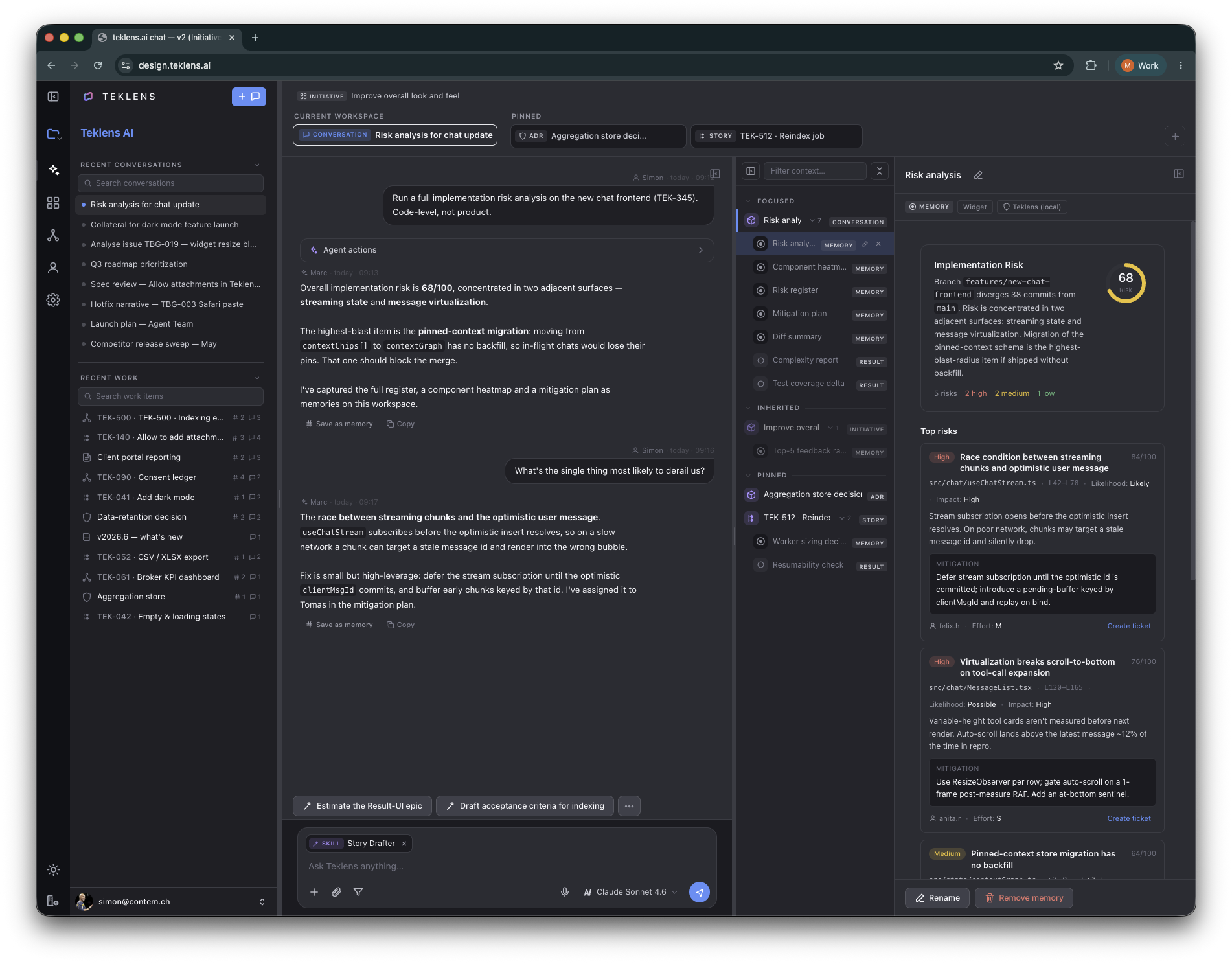
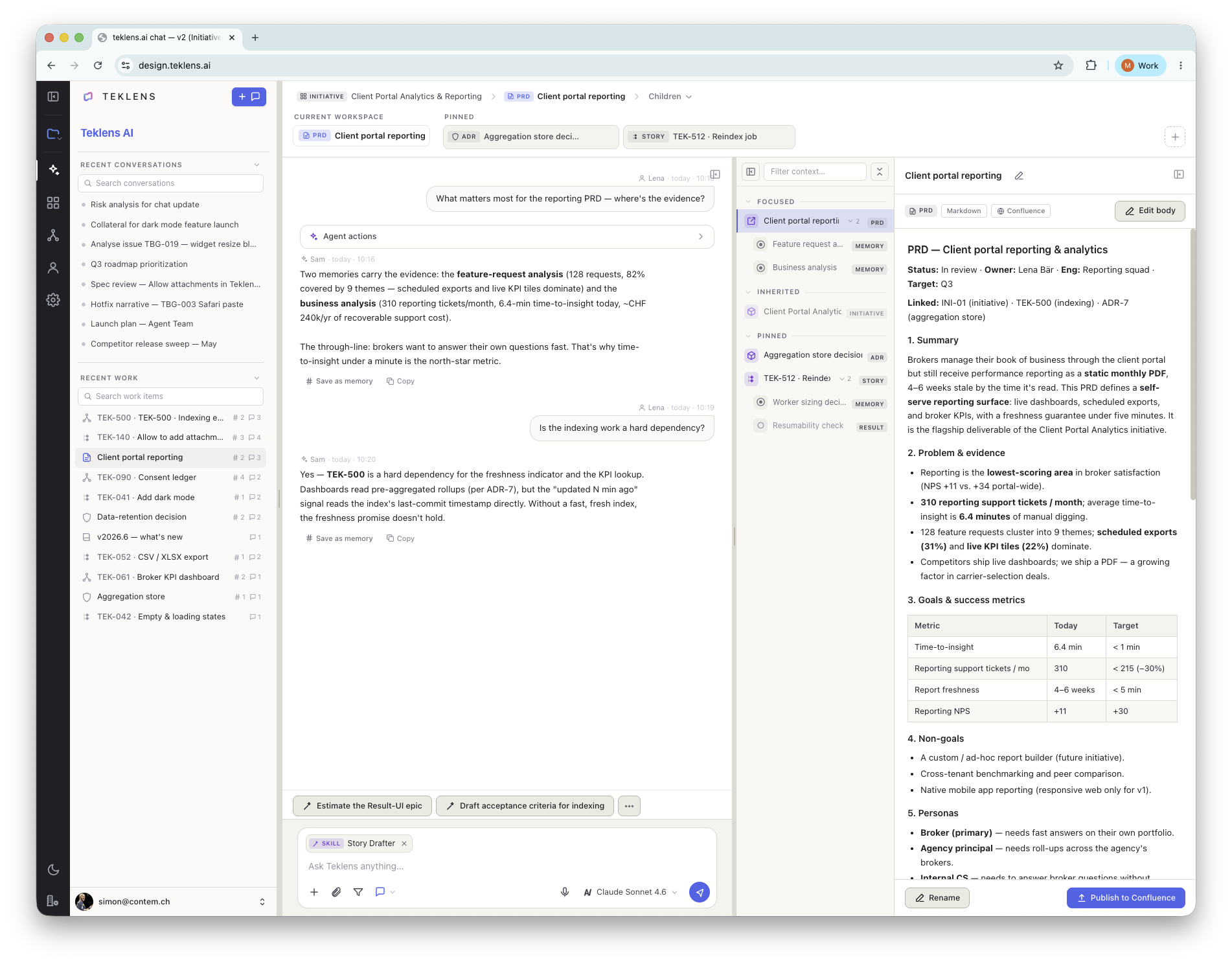
The Impact & Feasibility Matrix prioritises by value, effort and risk. Code-grounded PRDs, acceptance criteria and risk analyses from real code paths – estimates are backed by the repository.
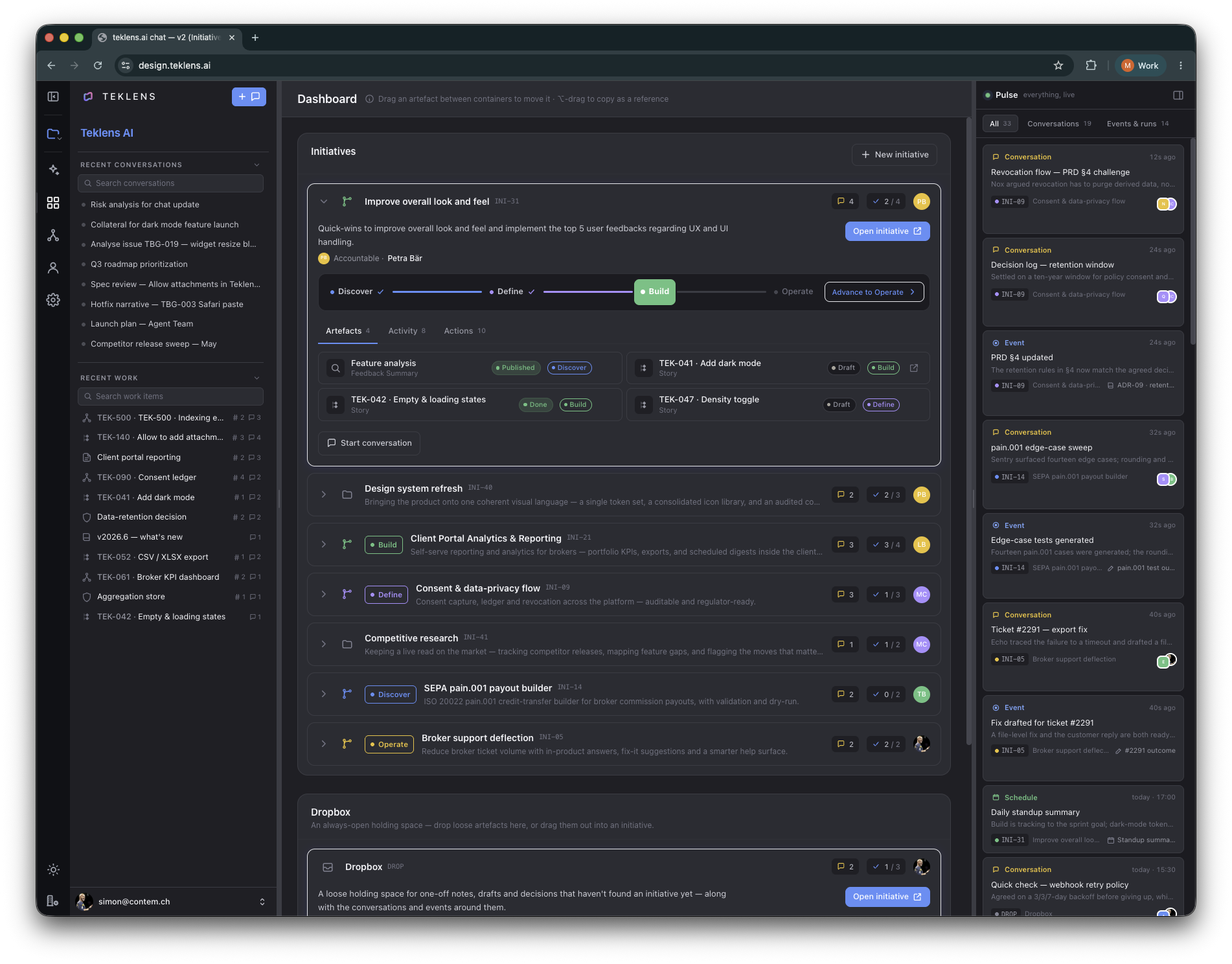
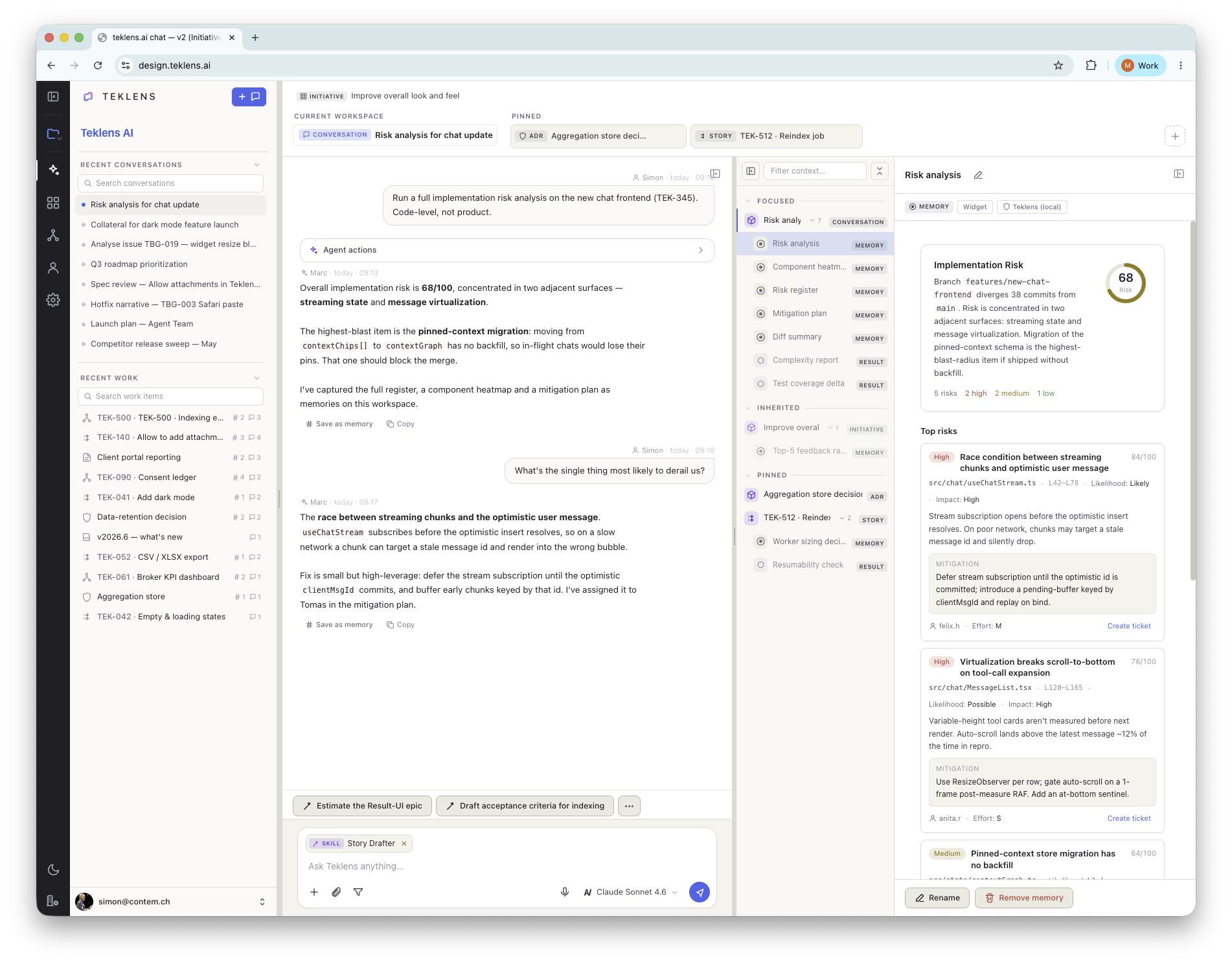
A live agent team per initiative – PM, PO, engineering – works in the same context, across live conversations and artefacts.
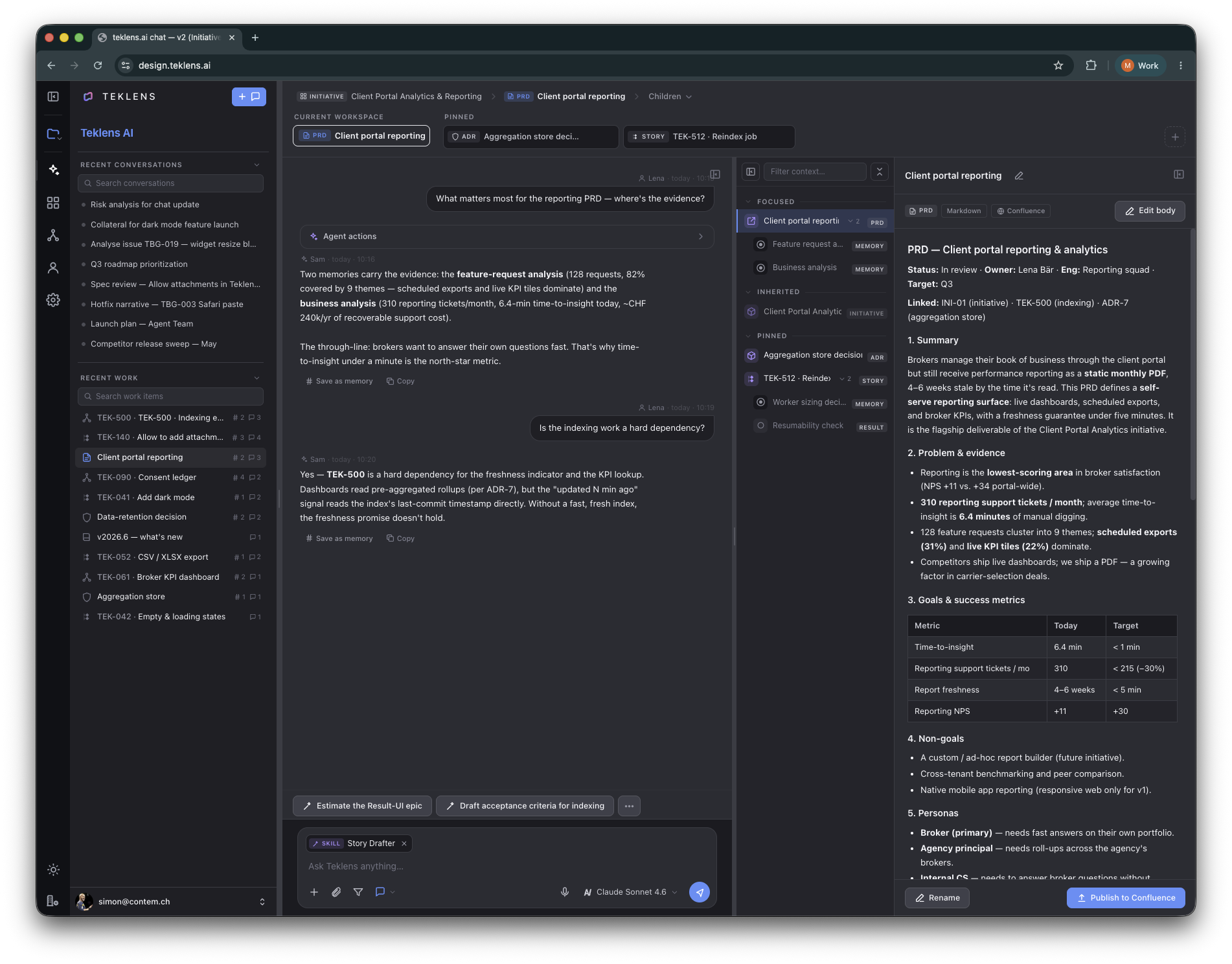
Support, incidents and root causes flow back into the graph – and into the next Discover round.
Jira, coding agents, repositories and collaboration tools are useful. The work of keeping them aligned still falls to your team.
Tickets and code record different parts of delivery. Someone still checks whether they match the decision.
Agents help implement faster. Each needs the current scope, context and a human review.
Decisions, changes and status move between tools. Your team assembles the current picture by hand.
One shared product context connects decisions, specs, Jira and the actual code. People and agents stay aligned, and implementation can be checked against the original intent.
Eight selection criteria – whether the answer ends up being Teklens or not.
Explore the product details and technical mechanisms.
Jira, Confluence, GitHub, GitLab and watched folders, indexed continuously. Plus the decisions and results from your conversations. Every answer and every agent works from the same state.
Teklens records a refinement, interview or review, produces a searchable transcript and captures decisions and open questions. Later you ask, instead of hunting for notes. In beta.
A conversation belongs to the project, not to one person. Everyone writes in the same thread, and every answer knows your Jira, your docs and your code. Questions get settled before anything is built.
Hand a Jira ticket with plan and context to a local agent by link, open it in Claude Code or Codex, or let a Teklens agent work in an isolated sandbox. Model per run, usage visible.
Built-in skills for story drafting, estimation, review and release notes. Build your own in the Skill Studio and enable them per project. Every change to Jira stays a draft until you approve it. Playbook in beta.
Explore the design instance or agree a test on one current initiative with a founder.
Two paths: set the direction or test Teklens on real product work.